
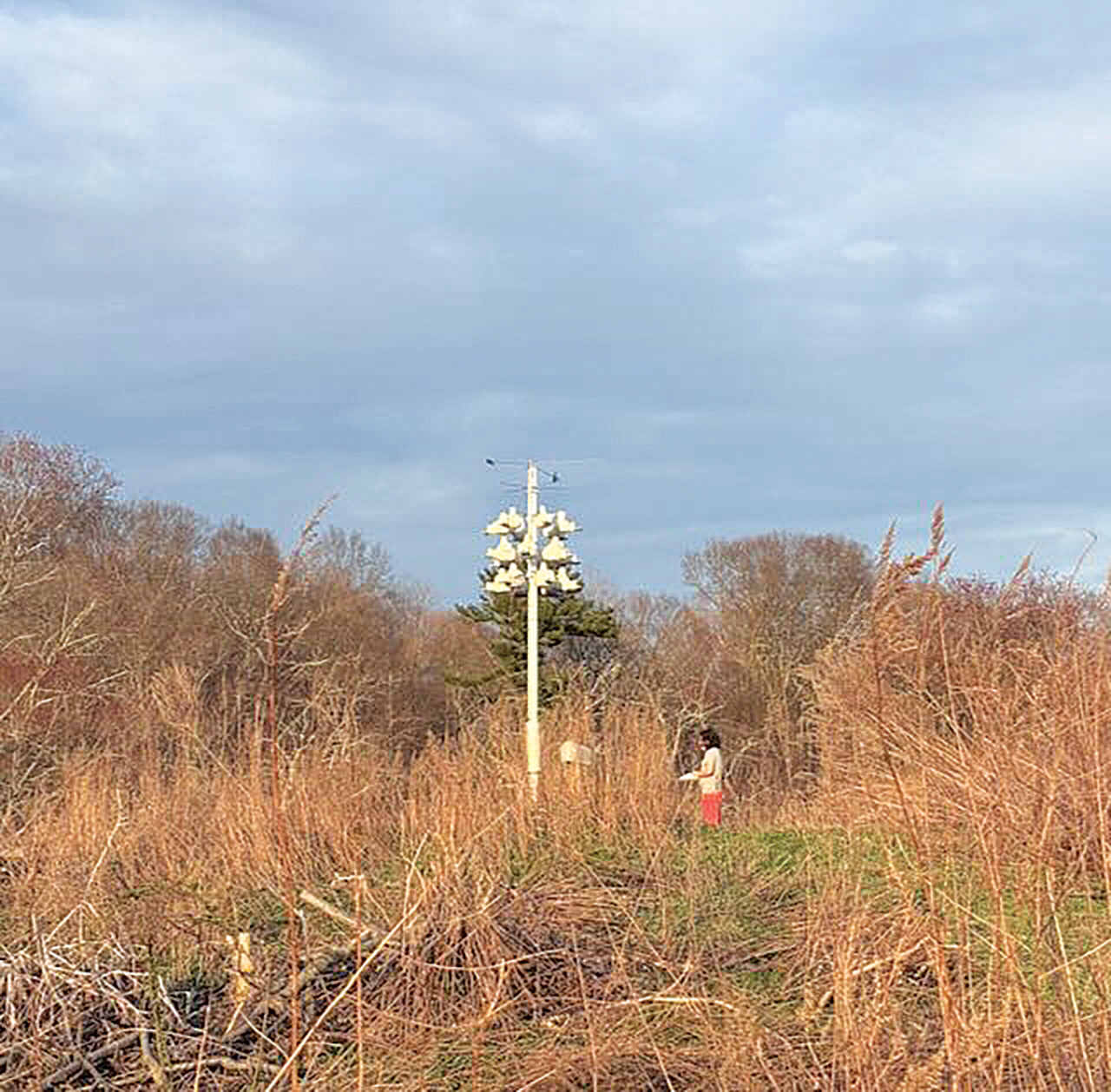
Last year, with the assistance of volunteers from the Menunkatuck Audubon Society, the Branford Land Trust installed and is closely monitoring nesting gourds for purple martins. Due to co-evolution with humans, purple martins would likely disappear as a breeding bird in eastern North America if humans were to stop supplying martins with homes. (West of the Rocky Mountains, purple martins still nest in natural cavities in dead trees or cliffs.) Purple martins have declined in numbers over much of their eastern range, including Connecticut. Competition from more aggressive, non-native European starlings and house sparrows for the nesting compartments people offer has contributed to this decline. Pesticide use and prolonged weather extremes also have reduced martin numbers. A small group of BLT volunteers has taken responsibility for monitoring our purple martin housing, including 11-year old Roberta “Rosie” Kim. If you would like to join the team to monitor these birds, please let us know via the help/volunteer tab at branfordlandtrust.org.
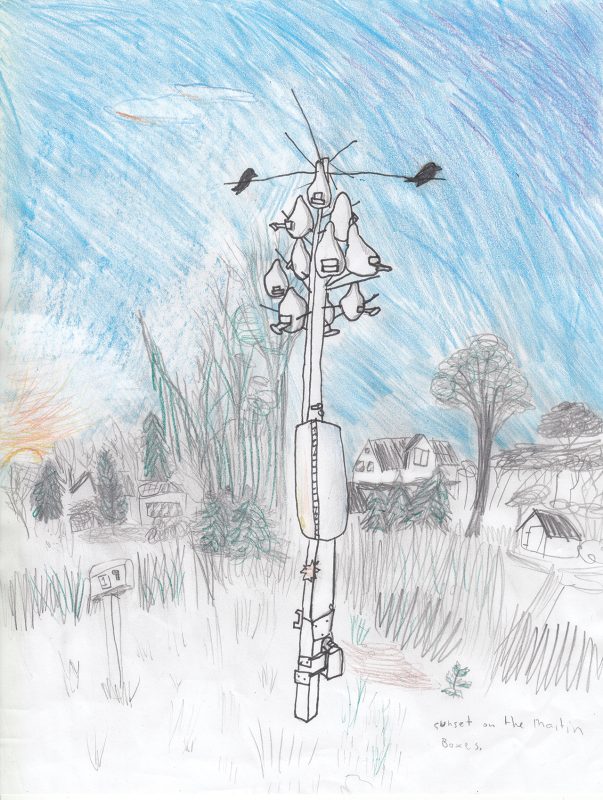
Purple martins are a species of birds that has become reliant on humans for nesting areas. People are worried that the martins will not know where to nest if human structures do not have the required spaces, so the Land Trust has set up next boxes for the birds to live in. They overwinter in Brazil, and then migrate back to North America to lay their eggs. I have been working to check the boxes for nesting purple martins and eggs. There haven’t been any so far, but the birds are only getting started! The nest boxes are shaped like large, plastic gourds, due to the past practice of carving out a certain variety of gourd and putting it outside for the birds to nest in. Since purple martins have grown accustomed to artificial housing, hopefully they will nest in these plastic gourds as eagerly as they do in real ones.
— Roberta Kim, age 11