
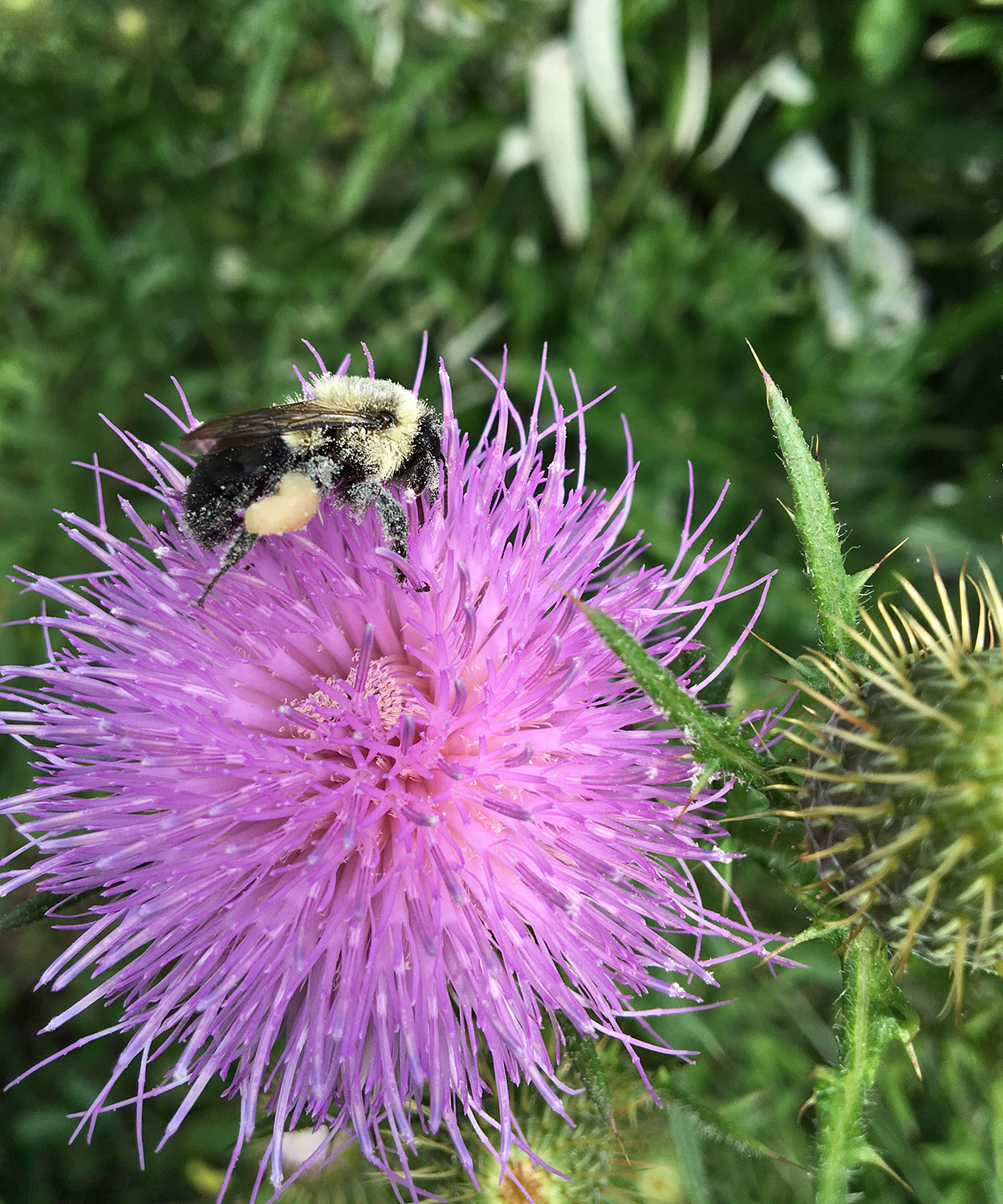
Are you interesting in fostering healthy natural habitats that support pollinating insects and birds? Then you’ve probably heard about Pollinator Pathways in Connecticut, and Branford. There is a state-wide effort of individual gardeners and land conservationists who commit to creating native, pesticide-free plantings. These are public and private pesticide-free corridors of native plants that provide nutrition and habitats for pollinators of many types. Even the smallest green spaces, like flower boxes and curb strips, can be part of a pathway.
Find out more about how you can do it in your own garden from Pollinator Pathways, a non-profit organization with groups rapidly sprouting up in towns all across the State.
Grow native pollinator-friendly plants. Growing native flowers, trees, and stewarding healthy soil, benefit our natural pollinators who depend upon specific host plants for their survival. There are some great resources on Native Plant lists that can help you get started.
(Our thanks to the Lyme Land Trust for their educational resources.)
Native Plant Lists
• Gobotany
• Pollinator Friendly Native Plant List (Xerces)
• Lady Bird Johnston Wildflower Center
• Selecting Plants for Pollinators
Invasive Plants
• Connecticut Invasive Plant List
• “Invasive Plants in Your Backyard! A Guide to Their Identification and Control”
• “Nix the Knotweed: Method of Threes”
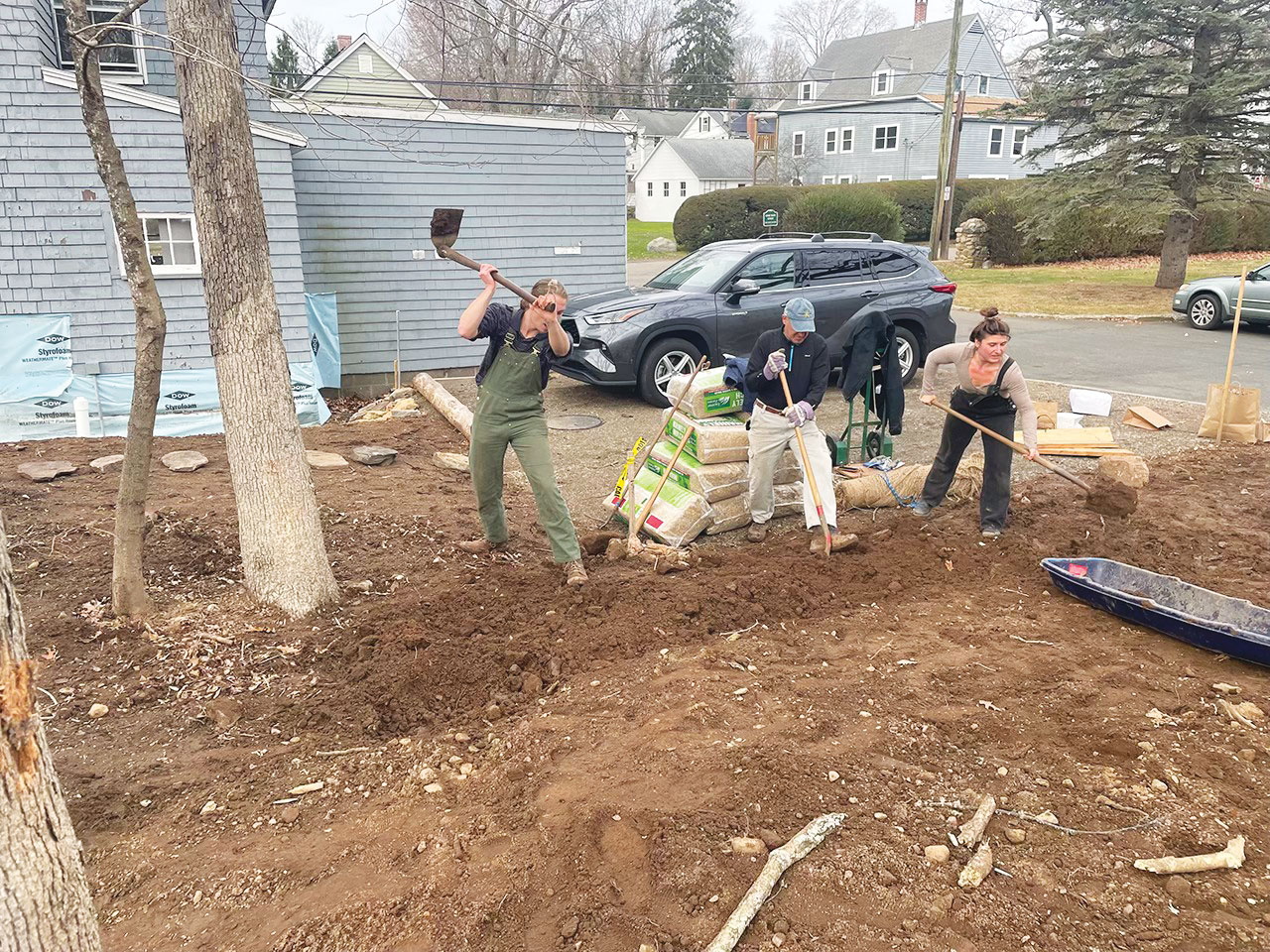
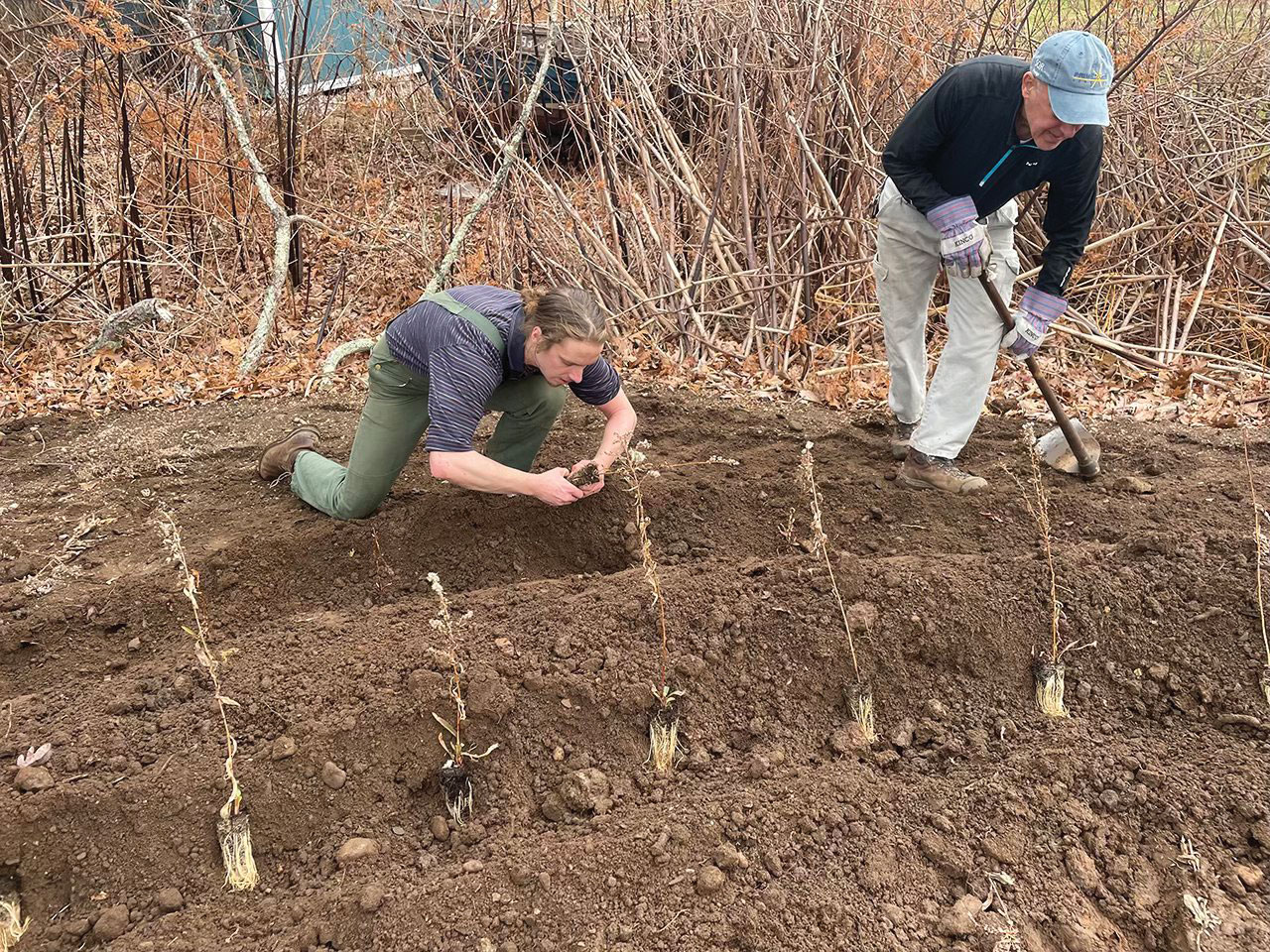
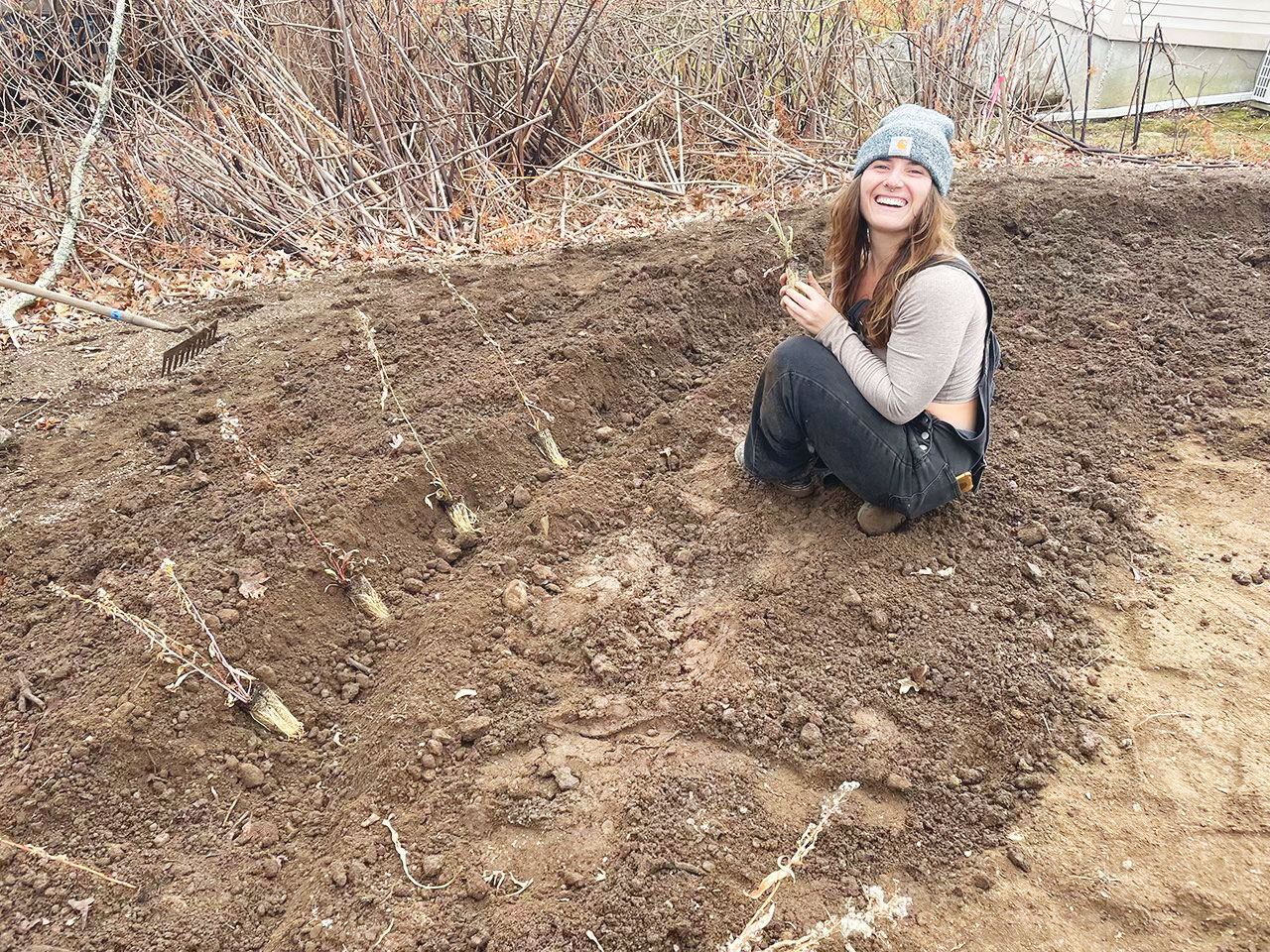
PLANTING NATIVE PLANTS AT THE LAND TRUST HOUSE
A special thank you to Lauren Brown, Bill Chapin, Taite Hodson, Ivy Kim, Susie McDonald, Clara Pagliaro, and Heather Wells Sweeney for helping to establish a native wildflower plant garden at the Land Trust House.
With the back space cleared to make room for our septic tank and leaching field, they’ve been working hard to save the remaining white oaks and other native species, and to plant a variety of native seeds and plugs for white wood and heart-leaved aster, wrinkled and seaside goldenrod, blue vervain, purple-top grass, broomsedge bluestem, ironweed, and more. All of the seeds were locally gathered. This should be a wonderful environmental and wildlife friendly option to planting grass.
Be sure to check out the plants’ progress in the coming year!