
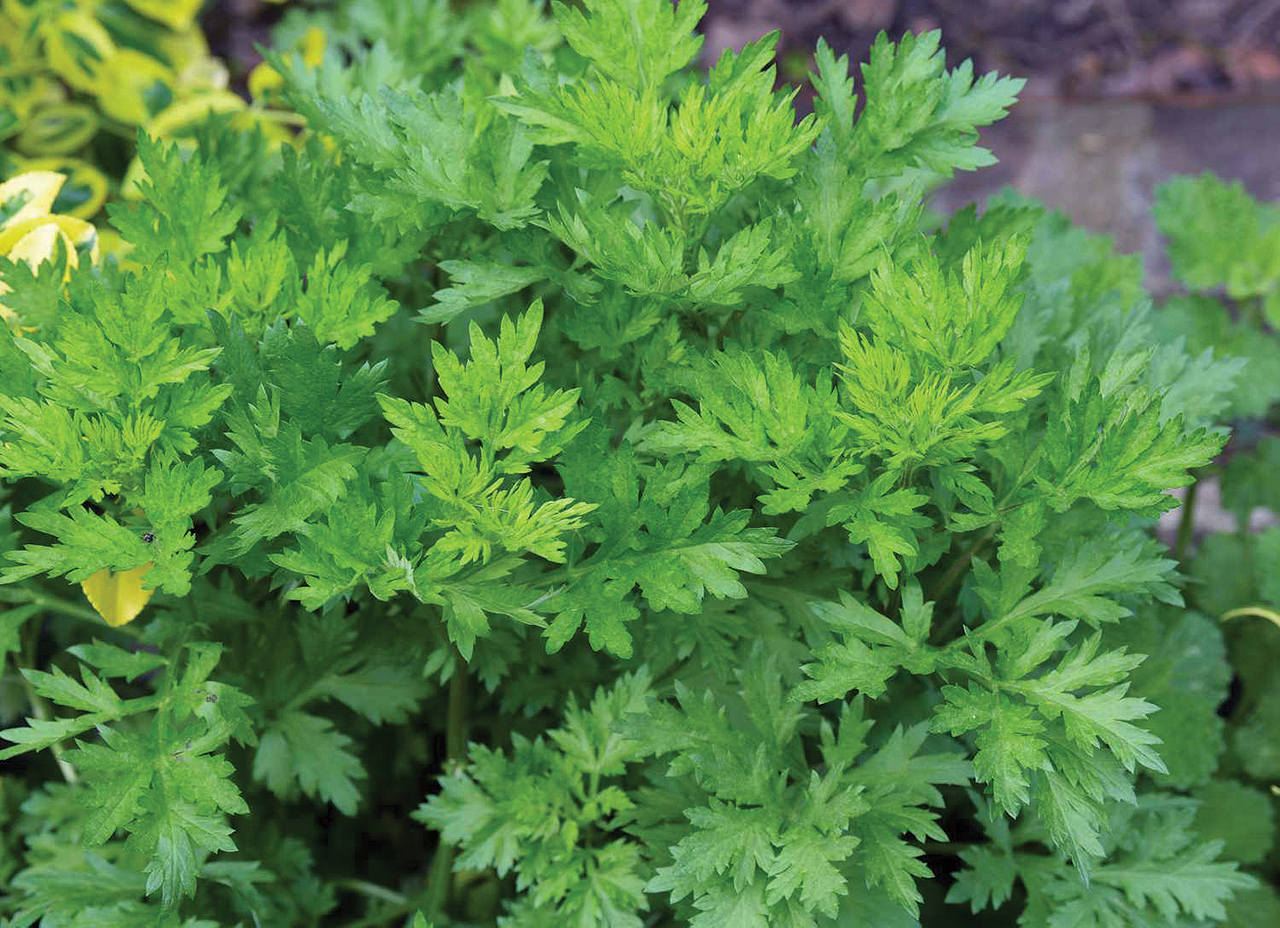
Common Mugwort is a familiar perennial with aggressive establishment on roadsides, right-of-way areas, and disturbed and uncultivated areas. It can grow 2-5 feet tall. Its leaves alternate with green on upper surface, while undersides are covered with dense white to gray hairs. The foliage is aromatic, with a chrysanthemum or sage-like odor. Its stems are a purplish-brown, branched, and covered with short hairs, and it has inconspicuous yellowish flowers that lack petals.
Mugwort spreads primarily by aggressive rhizomes (horizontal underground stems), which form large, fast-spreading patches and can also reproduce by seed.
To prevent seed dispersal, mow from early summer to mid-September, before seedhead production or before seed has matured. The first two weeks of September are the best time to mow. (See link below for more about mowing.)
Hand pulling very young plants in spring or early summer, before formation of rhizomes, may keep spread of populations in check and prevent establishment. A heavy-duty landscape fabric or other impenetrable mulch can be used to smother mugwort.
Common mugwort, native to Europe and Eastern Asia, was brought into North America as early as the 1600s for medicinal purposes. It spread throughout the Northeastern U.S. as a contaminant on ships and nurseries. Mugwort pollen is a common cause of allergies and hay fever, wherever abundant. Common mugwort is found throughout much of the northeast, extending west to Minnesota and south to scattered areas in Florida. Many counties in Oregon and Washington have also reported large populations.
• Find more info: tinyurl.com/Uconnmugwort
SOURCE: UCONN College of Agriculture, Health and Natural Resources, Connecticut Invasive Plant Working Group