
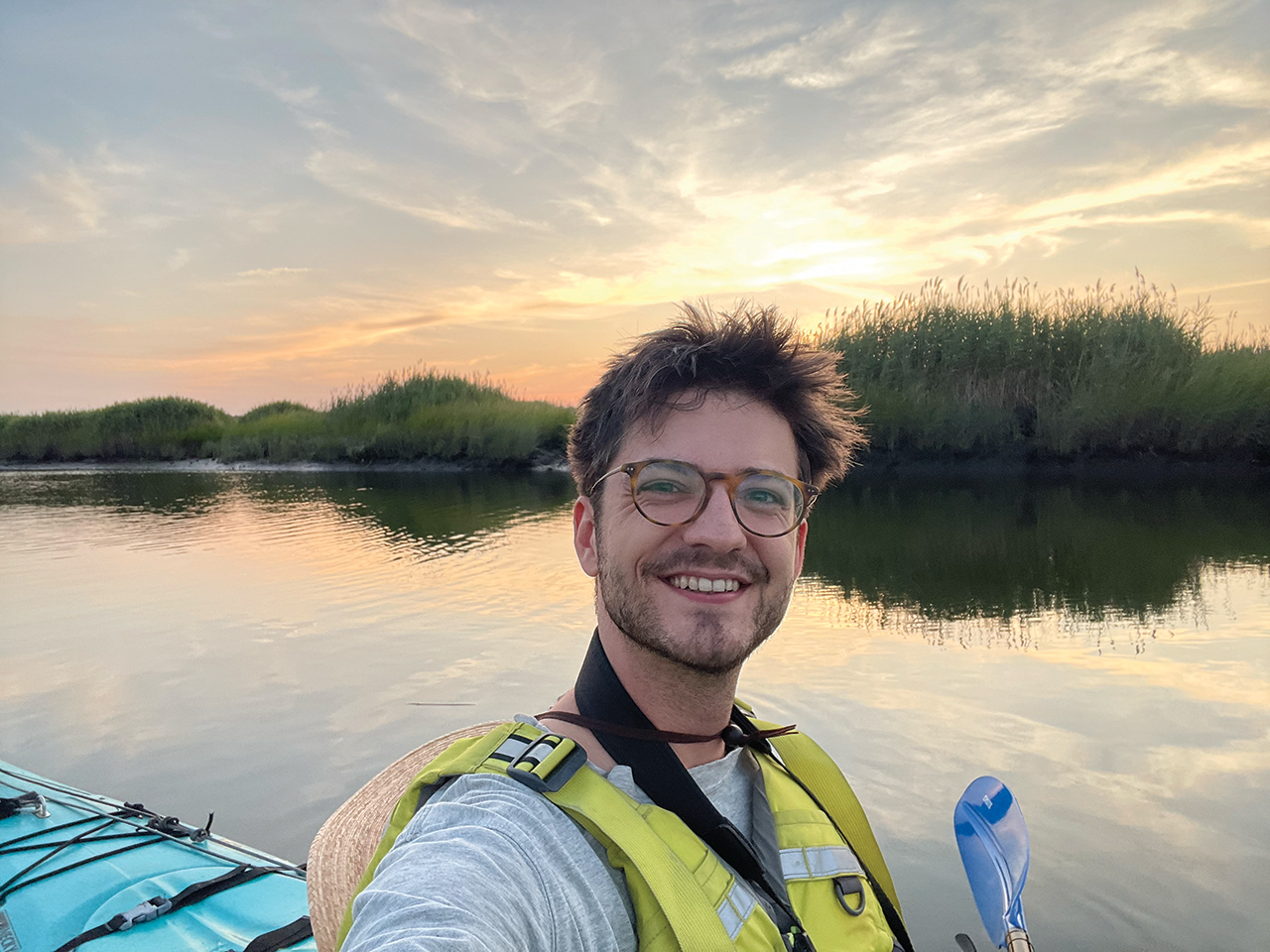
From Sam Blair, MESc ’26, Yale School of the Environment
Connecticut’s salt marshes are on the front lines of climate change, and a great deal of effort has gone towards studying their changing ecosystem dynamics and testing adaptive approaches to their restoration and management. But marshes aren’t just ecosystems—they’re also social systems, shaped by institutions, technologies, and ideas. If history is any guide, marshes’ “social lives” will play a key role in determining their futures; yet these lives are underrepresented in existing scientific and regulatory models.
Over two years of research for my Master’s of Environmental Science degree, I asked what Connecticut marshes’ “social lives” look like today, how they’re changing, and what those changes might suggest for the future. My fieldwork took me from marshes to conference rooms, back porches, and boat launches. Ultimately, I spoke with ninety five informants—regulators, scientists, managers, and community members—and visited twenty four marshes, including four sites managed by the Branford Land Trust.
My research shows that change in Connecticut’s coastal wetlands is often driven by forces we don’t usually think of as ecological. These include the internal politics of state and federal regulatory bodies; the scientific challenges of modelling complex systems; and local communities’ struggles over political and cultural identity. While climate change and other ecological perturbations will undoubtedly shape the future of Connecticut’s salt marshes, my results suggest that changes to the social processes associated with marsh governance could be equally, if not more, transformative. What would happen if we saw the “social lives” of salt marshes as a resource as rich, varied, and potentially vulnerable as the marshes themselves?